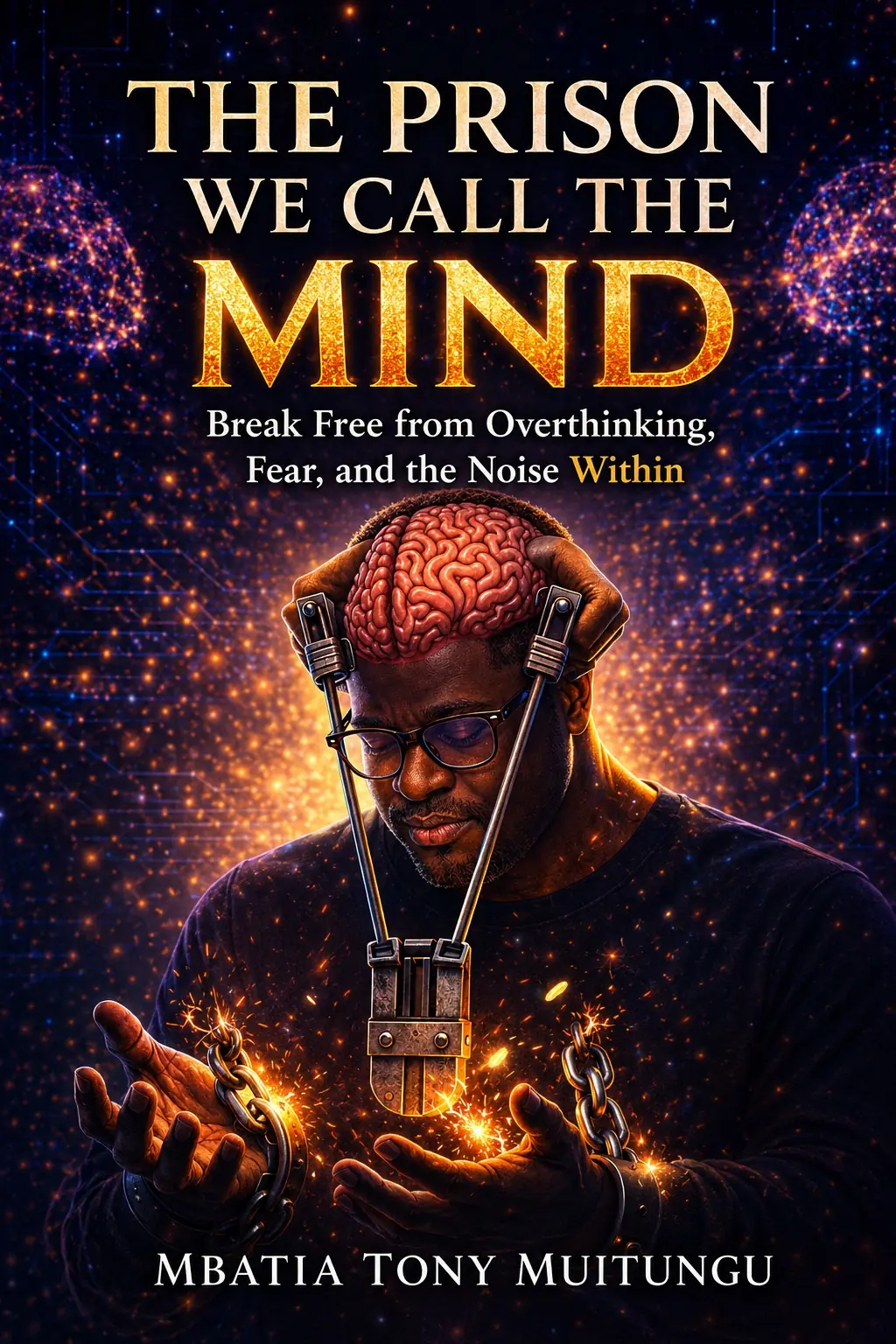
The people inside this prison go to work, raise families, celebrate birthdays, and post photographs of themselves smiling. By every outward measure, they are free. And yet, inwardly, many of them are not fully living. They are serving a sentence handed down by their own minds.
This is not a condition reserved for the dramatic few. It is the quiet condition of the majority: a life in which thought has ceased to be an instrument and has gradually become an invisible authority.
The Power We Were Given
The human mind is, without exaggeration, one of the most extraordinary instruments in existence. It has mapped the stars, decoded the genome, and turned its attention inward to study its own neurons. It composes music that moves strangers to tears and designs bridges capable of carrying millions of tons of trust across open air.
Every technology, every medical breakthrough, every philosophy, and every work of art humanity has produced passed first through a human mind.
Thought, used consciously, is not the problem. It is one of life’s greatest tools. Like a hammer, it can build a home, repair what is broken, or create something that did not exist before. But a tool becomes dangerous when the person holding it forgets that it is a tool.
When the Tool Becomes the Operator
Here is the quiet reversal most of us never notice: the tool becomes the operator.
Instead of using thought when it is useful and allowing it to become quiet when it is not, many people are used by thought almost continuously. The mind replays conversations that have already ended, rehearsing what should have been said. It imagines conversations that have not happened, preparing arguments no one has started. It compares this moment with a past that no longer exists and a future that has not arrived—and finds the present inadequate by comparison.
This is psychological time: a life lived almost everywhere except where it is actually happening.
The difficulty is that this activity rarely feels like imprisonment. Worry disguises itself as responsibility. Self-criticism calls itself honesty. Replaying the past feels like an attempt to understand. Imagining every possible danger feels like preparation.
Because the movement has been repeated for years, it no longer appears as something the mind is doing. It feels like identity. We stop saying, “A worried thought is appearing,” and begin saying, “I am a worried person.” We stop recognizing self-criticism as a conditioned mental pattern and accept its conclusions as truth.
That is the trap—not the existence of thoughts, because everyone has them, but the unexamined assumption that you are the voice narrating your life rather than the awareness capable of hearing it.
The Voice That Claims to Be You
The thinking mind speaks with extraordinary confidence. It interprets a moment and then presents its interpretation as reality. It says you are not ready, not worthy, too late, too damaged, or too far behind. Because the voice uses the word “I,” its conclusions feel personal and authoritative.
But a thought can use your voice without expressing your deepest intelligence. It may be an inherited belief from childhood, an emotional echo from an earlier wound, a cultural expectation, a fear response, or simply a habit strengthened through repetition.
If every thought were true, opposing thoughts could not exist. Yet the mind can declare one decision correct in the morning and condemn it by evening. It can demand certainty and then mistrust the certainty it receives. It can create a problem, argue both sides of it, and exhaust the body while calling the entire process necessary.
The voice is real as an experience. Its conclusions are not automatically reality.
The Way Out
The solution is not another goal, another identity, or a better argument to win against yourself. Effort of that kind often adds another layer of thought to the thinking that was already creating the problem.
The way out is simpler—and stranger—than it first appears: notice the voice in your head instead of automatically becoming it.
The instant you become aware that thinking is happening—not merely absorbed in the content of the thought, but conscious of the process itself—something shifts. A small distance opens between awareness and the mental movement being observed.
That distance is not emotional coldness or withdrawal from life. It is the beginning of clarity. You can hear a thought without obeying it. You can feel an emotion without turning it into an identity. You can remember the past without moving back into it psychologically. You can prepare for the future without forcing the body to live there in advance.
Freedom does not require the permanent disappearance of thought. It begins when thought is seen in its proper place—as an event arising within consciousness, not as the totality of who you are.
What Awareness Changes
When a painful thought is unconscious, it appears to be reality. When it is observed, it becomes an experience passing through awareness. The circumstance may not change immediately, but your relationship with it does.
Awareness creates the space in which choice becomes possible. Without that space, conditioning reacts automatically. With it, you can ask: Is this thought true? Is it useful? Is action required now? Or is the mind repeating an old pattern because repetition has become familiar?
In ordinary moments, this practice may be almost invisible. You notice tension before speaking harshly. You recognize comparison before allowing it to diminish your life. You hear the inner accusation and decline to turn it into a verdict. You feel fear without giving fear complete authority over your next decision.
Each moment of observation weakens the assumption that every mental movement must be followed.
Why This Matters Now
We live in an age of unprecedented access to information, opinion, outrage, comparison, and stimulation. The mind is continually invited to react. Notifications interrupt attention. Algorithms amplify emotional content. Public performance encourages people to construct identities and then defend them as though their survival depended upon it.
In such a world, metacognition—the capacity to recognize thought as thought—is not merely a spiritual idea. It is an essential form of inner literacy.
None of this asks you to stop thinking, disengage from life, or pretend that genuine problems do not exist. It asks something smaller and more immediate: notice, more often, that you are the awareness in which thoughts appear—not the thoughts themselves.
That shift, practiced in small and ordinary moments, is what separates a mind that serves a life from a mind that quietly runs one.
The Door Was Never Locked
The prison of unconscious thought is unusual because the door does not have to be broken down. It has to be noticed.
You do not escape by destroying the mind. You restore it to its rightful purpose. Thought becomes available when needed—for planning, learning, creating, communicating, and solving practical problems—and it is no longer granted unlimited authority over your identity and inner peace.
The mind remains a magnificent instrument. But awareness becomes the one holding it.
This is the territory The Prison We Call the Mind was written to explore in full: how the trap is constructed, why it feels so convincing from inside, and how the doorway to freedom has remained open the entire time.
— Mbatia Muitungu
A Voice of Awareness in a Noisy World
The Prison We Call the Mind
Break free from overthinking, fear, and the noise within.
Get the book on Amazon