It is the end of a long day. The work is done, the dishes are done, and the house has finally gone quiet. But your mind has not. It is still replaying a hard conversation, still adding up the bills, still worrying about tomorrow. So you pour a drink. Not to party and not to celebrate. Just to make the noise stop for a while.
If that sounds familiar, you are not strange and you are not alone. "Why do I drink when I'm stressed?" is one of the most honest questions a person can ask. It deserves a kind answer, not a lecture.
I have watched this pattern up close for a long time. I have seen it in my larger family, among friends and coworkers, in my community, and in patients I cared for as a nurse. What I learned is simple. Most of the time, the drink is not really about the drink.
The drink is rarely about the drink
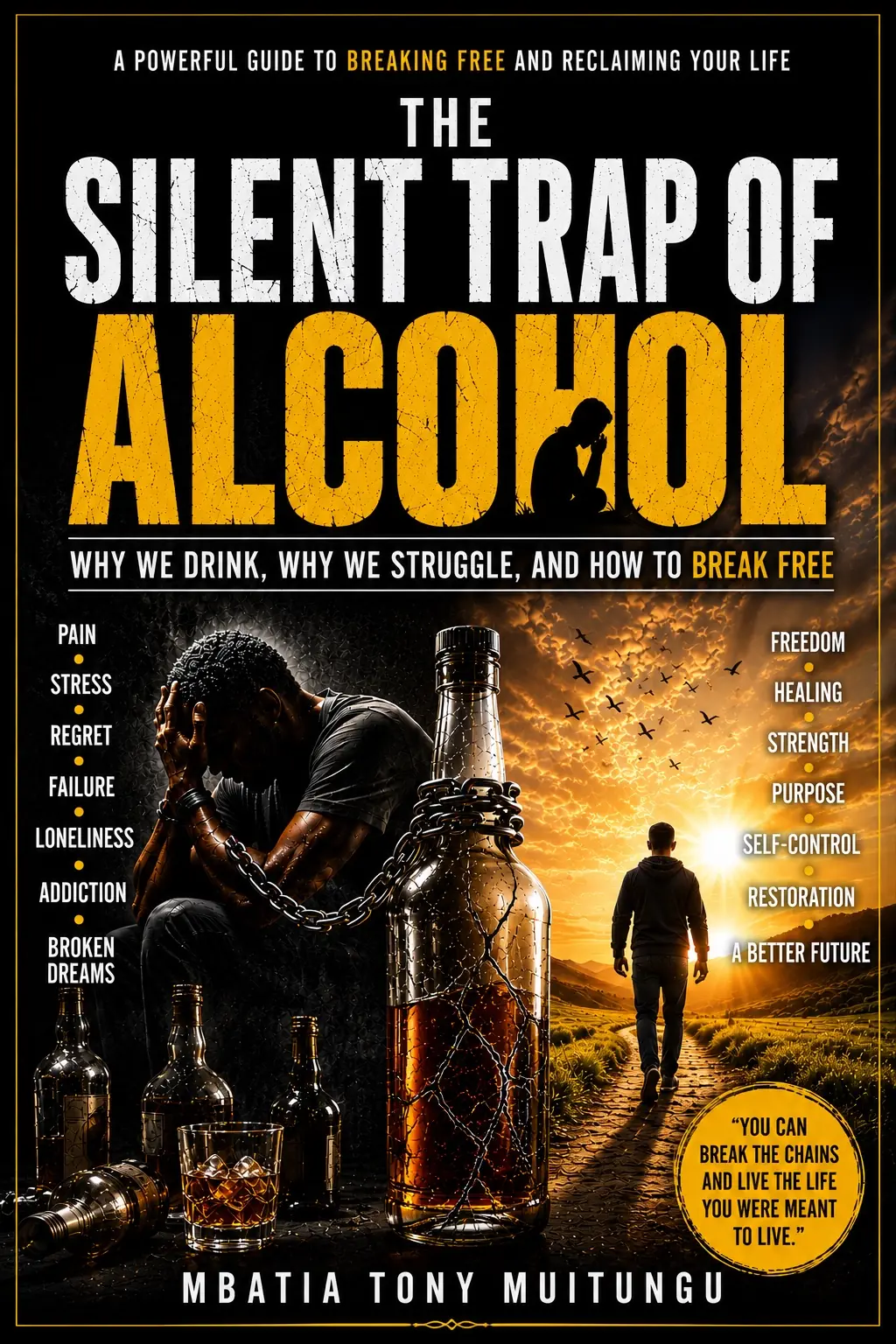
In The Silent Trap of Alcohol I wrote: "For many people, alcohol does not begin as pleasure. It begins as emotional escape."
When we picture someone who drinks too much, we often picture someone loud at a party. But a lot of stress drinking is quiet. It happens at the kitchen table, alone, after everyone else has gone to bed. A person can go to work every day, pay every bill, smile at every family gathering, and still lean on a glass each night to get through what is going on inside.
Under the drinking there is often something that never got a voice. Worry about money. Loneliness. Grief that was never given time. Anxiety that hums in the background all day. Old pain from childhood that nobody talked about.
Many of us were never taught what to do with hard feelings. We were taught to hide them, push them down and keep going. So when a drink makes those feelings go soft for an evening, of course it feels like help.
Why a drink seems to work
Here is the part that makes stress drinking so convincing: for a little while, it does work.
Alcohol slows down parts of the nervous system. The racing thoughts slow. The chest loosens. The worries feel farther away. For someone who has been tense since morning, that first hour can feel like finally being able to breathe.
Your brain notices. The human brain is built to repeat whatever brings relief. If something takes the edge off, the brain marks it as useful and reminds you of it the next time stress shows up. That is not a flaw in your character. It is how all of us are wired. And it is how a drink after a bad day slowly becomes a drink after every day.
The trouble comes later, once the alcohol wears off. The nervous system bounces back, and it often bounces back harder than before. Sleep gets lighter and broken. The next day you may feel more on edge, more irritable and more low. When evening comes, the stress feels bigger, so the drink feels more needed.
In the book I describe it as a loop: "Pain appears. Alcohol temporarily numbs it. The nervous system rebounds worse afterward. More emotional discomfort appears. The person drinks again. The cycle repeats."
Or, as I put it in the introduction: "alcohol does not solve suffering. It postpones it while silently deepening it."
What I have seen around me
I have seen this pattern in many places. In my larger family. Among friends and coworkers. In my community. And as a nurse, in patients whose bodies were paying for years of drinking. Out of respect for everyone's privacy, I will not tell anyone's story here. But I can share the patterns that kept showing up, and what stayed with me.
Among coworkers, a drink after a hard shift or a long week is often treated as normal, even expected. It is how people unwind together and how they show they belong. In many communities, weddings, holidays and weekend get-togethers are built around drinking, so saying no can make a person feel strange or left out. And in families, the habit is often passed down without a word. Children watch how the adults around them handle a hard day, and many learn early that a drink is what you reach for when life gets heavy.
Nobody plans to lose their peace to alcohol. It usually starts as something small and reasonable. The reason given is very often the same one you may have given yourself: "It helps me relax." And for a long time, it seems to.
I also learned that the people caught in this were not weak. Alcohol changes the brain and our habits slowly, so slowly that a person can believe they are still in charge long after the habit has started making the choices. That is why shame does not help anyone here. Shame just becomes one more feeling to drink over.
What helps is understanding. When you see clearly what the drink is doing for you, and what it is costing you, you get your choice back.
An honest question to ask yourself
You do not have to decide today whether you have "a problem." Labels can wait. A more useful question, one I ask in the book, is this: "How uncomfortable do I become without alcohol?"
Give it a few evenings and simply notice. Notice whether you can unwind at night without a drink, whether sleep comes, and whether a hard day feels bearable without a glass at the end of it. If the honest answer is that it feels very hard, that does not mean you are broken. It means alcohol has become your main way of handling stress, and you deserve more than one way.
There is another quiet sign worth looking at. You may tell yourself you drink because you enjoy it, yet you notice you mostly reach for it on the bad days. In the book I put it like this: "Many people believe they are drinking for pleasure when in reality they are drinking to avoid discomfort." Those are two very different relationships with a drink.
Sit with these for a moment
What feeling do I most want to quiet when I reach for a drink?
Do I drink mostly for enjoyment, or for relief?
What could I put in that space tonight instead?
Other ways to bring the quiet
The stress you feel is real, and it needs somewhere to go. As I wrote in the book, "chemically sedating stress is not the same as healing stress." The goal is not to grit your teeth through every evening. It is to give your stress something that helps instead of something that costs.
There is a line in the chapter on replacing the habit that I come back to often: "The human mind dislikes emptiness." If you take away the evening drink and put nothing in its place, the evening will feel empty and the old habit will call louder. So plan what goes in that space. Here are some small, ordinary places to start.
Name the feeling before you pour. Say it plainly, even just in your head: I am stressed. I am lonely. I am angry. I am worn out. A feeling that has a name tends to lose some of its push.
Check in with HALT. In the book I share an old reminder used in many support groups. People are most likely to reach for a drink when they are Hungry, Angry, Lonely or Tired. Very often the craving is one of those four in disguise. Eat a real meal. Call someone. Go to bed early.
Change the ritual, not just the drink. If seven o'clock at the kitchen counter is the moment the urge shows up, make that the time you take a walk, have a hot shower, or make tea and drink it slowly from a glass you like.
Let the urge pass. An urge rises, peaks and fades, a bit like a wave. You do not have to fight it. Give it twenty minutes and keep your hands busy. Often it softens on its own.
Let someone in. Stress that is shared gets lighter. A friend, a counselor, a faith leader or a support group can carry some of what you have been carrying alone.
Talk with your doctor. This matters most if you drink every day. Please do not stop heavy daily drinking suddenly on your own. Withdrawal can be dangerous, and a doctor can help you cut back safely.
If racing thoughts are a big part of what you are trying to quiet, you may also find help in I AM PRESENCE, on how to stop chasing fearful thoughts, and in The Prison We Call the Mind. And if being alone with yourself is the hardest part of the evening, The Courage to Meet Yourself was written for you.
The quiet you were really looking for
The wish behind the drink is a good wish. You wanted the noise in your head to stop. You wanted to rest. There is nothing wrong with wanting that.
In the book I wrote: "Alcohol temporarily silenced that inner noise. But temporary silence is not healing." Real quiet is slower to build. It grows from rest, from honest talks with people who care about you, from moving your body, and from learning to sit with a hard feeling long enough to see that it passes.
So tonight, if the house goes quiet and your mind does not, try one small thing before you pour. Stand by the window and take ten slow breaths. Notice what you are actually feeling. Give yourself the chance to meet what is under the noise.
Near the end of the book's opening invitation, there is a line I still believe: "The peace you were searching for was never truly inside alcohol. It was waiting beneath the noise all along."
MbatiaQuotes